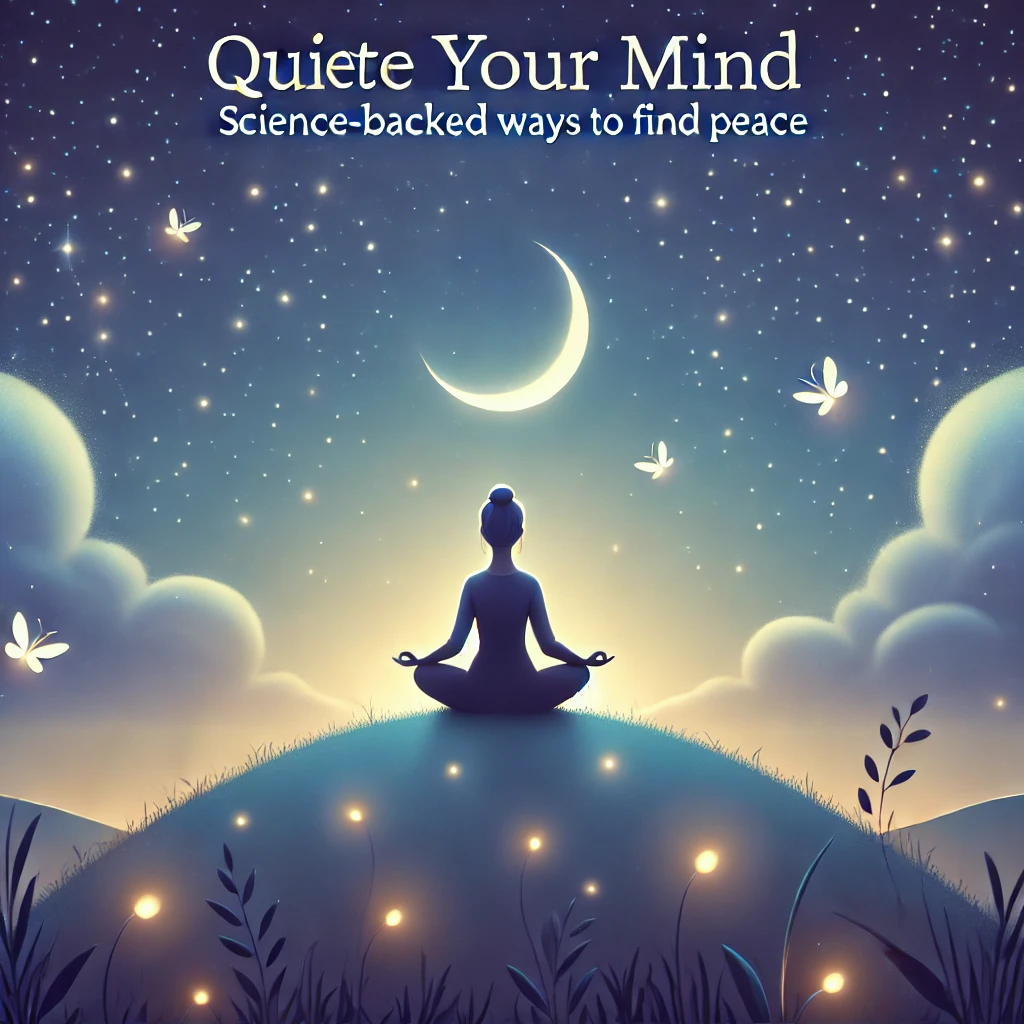
? Is Your Mind Stuck in Overdrive? Here’s How to Hit the Reset Button
Ever climbed into bed exhausted, only to have your brain go ? full-speed ahead—replaying past conversations, worrying about tomorrow, or building a never-ending to-do list? It’s like your mind has its own "autoplay" mode, and you just can’t find the remote to turn it off.
If this sounds familiar, you’re not alone. In today’s world of constant notifications, stress, and information overload, mental noise is at an all-time high. But here’s the good news: science has cracked the code ?? on how to quiet your mind and finally find peace.
? Why Can’t You Turn Your Brain Off?
Your brain is a powerhouse, constantly working—processing emotions, memories, and thoughts. But sometimes, it gets stuck in overdrive, making it impossible to relax. Here’s why:
1️⃣ The "Overthinking" Brain: The Default Mode Network (DMN) ?
Your brain has a built-in “background processor” called the Default Mode Network (DMN). It kicks in when you’re not actively focusing on a task—like when you’re daydreaming, reminiscing, or worrying.
? The problem? Some people’s DMN stays on high alert, leading to non-stop mental chatter, intrusive thoughts, and racing worries.
2️⃣ Stress & Anxiety: The Brain’s "Fire Alarm" ??
When you’re stressed, your brain goes into survival mode—pumping out cortisol and adrenaline. While this helps in actual emergencies, it’s not great when you’re just trying to fall asleep or enjoy a peaceful moment.
⚡ Result? Your brain stays wired, and your thoughts keep spinning.
3️⃣ Too Much Screen Time = A Wired Brain ??
Let’s be real: We’re glued to our screens. Studies show that blue light exposure before bed disrupts melatonin production, keeping your brain in “awake mode”—even when you’re exhausted.
? Quick fix? Cutting back on screen time before bed can help your brain shift into relaxation mode naturally.
?♀️ How to Quiet Your Mind (Backed by Science!)
Now that you know what’s causing the chaos, here’s how to press pause on the mental noise and bring in some much-needed peace.
✅ 1. Mindfulness Meditation ?♂️
? Science says: Meditation helps turn down the Default Mode Network, reducing mental clutter. Harvard research shows that just 10 minutes of daily mindfulness can improve focus and calm the mind.
? Try this: Use meditation apps like Headspace or Calm to get started!
✅ 2. Cut Screen Time Before Bed ??
? The fix: Avoid screens 1 hour before sleep. Instead, try:
? Reading a book
✍️ Journaling your thoughts
?️ Doing deep breathing exercises
✅ 3. Deep Breathing: The 4-7-8 Method ?️
This simple breathing trick can instantly slow down a racing mind:
? Inhale for 4 seconds
⏳ Hold for 7 seconds
? Exhale for 8 seconds
? Repeat 4-5 times, and feel your brain calm down!
✅ 4. Move Your Body, Calm Your Mind ?♂️?♀️
Exercise isn’t just for fitness—it’s for mental clarity too! Physical activity releases endorphins, reduces stress hormones, and helps the brain shift out of overdrive.
? Quick win: A 30-minute walk, yoga session, or dance break can do wonders!
✅ 5. Gratitude Rewires Your Brain ❤️
Gratitude shifts your focus away from stress and onto what’s going right. Research from UC Berkeley found that daily gratitude journaling reduces anxiety and improves sleep.
? Try this: Every night, write down 3 things you’re grateful for.
✨ Ready to Find Your Inner Peace?
Your brain doesn’t have to feel like a never-ending traffic jam of thoughts ??. By practicing mindfulness, limiting screens, breathing deeply, moving your body, and focusing on gratitude, you can take back control and finally find calm.
? Want personalized help managing stress and anxiety? Book a consultation with our experts today and start your journey to a clearer, calmer mind! ?♂️?
? References
1️⃣ Brewer, J. A., et al. (2020). "Mindfulness Training and Brain Network Function." Harvard Review of Psychiatry, 28(6), 377-385.
2️⃣ Fink, G., et al. (2021). "Stress, Anxiety, and the Brain: The Role of Cortisol in Emotional Regulation." Journal of Psychiatric Research, 44(5), 617-625.
3️⃣ Reddy, M., & Patel, S. (2022). "The Effects of Screen Time on Mental Health." Psychiatry Today, 31(3), 120-127.